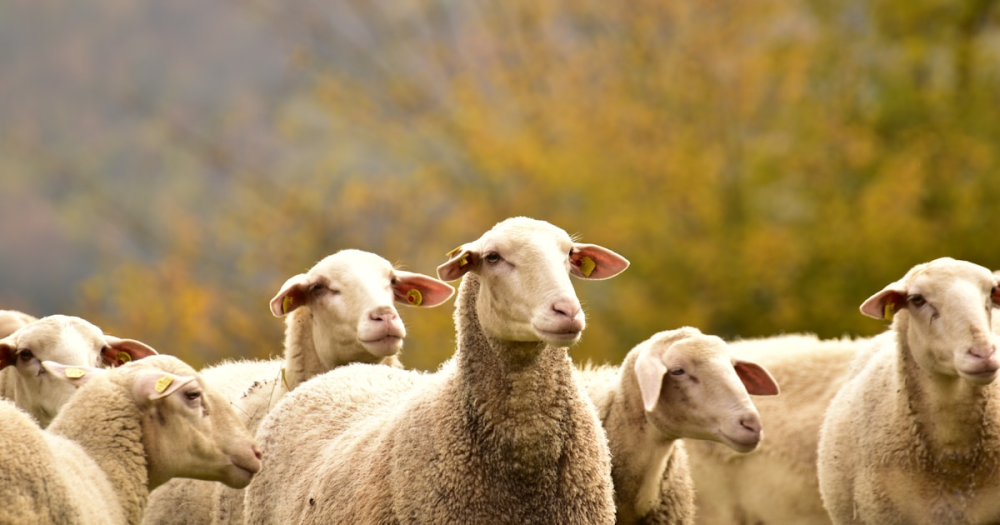
About 10,400 years ago, on a stretch of the Melendiz River in central Turkey, somebody caught a wild lamb and walked it back into the settlement.
They were not domesticating it. They were storing it. Archaeologists working at Aşıklı Höyük found a thousand-year record of this, and the earliest stage was catching wild lambs and growing them on site for a few months before slaughter. Live meat storage, with legs.
Then the flocks came out of the houses. Over the next millennium the site moved from residential stabling to open pasturing, which is the same decision anyone raising sheep still makes in the first week.
Sheep? Grass? Starting small? Let’s go!
What raising sheep actually involves
Raising sheep means managing grass first and animals second. The flock turns forage into meat, and everything you do well or badly shows up in the pasture before it shows up in the animal.
Five things decide whether it works. How much land you have and how you move the flock across it. Which breed you buy. How you handle internal parasites. How you handle predators. And who buys the lamb.
Notice what is not on that list. Wool. Sheep were penned for meat, milk, and hide for thousands of years before anybody bred them for fleece, and selection for woolly sheep does not appear in the record until around 6000 BC. Wool was the late addition, and in America it is quietly leaving again.
This is also not a fringe pursuit. When USDA last ran its death loss study, operations running 1 to 99 breeding sheep made up 94.5 percent of all sheep operations in the country. A small flock is not the exception in American sheep farming. It is the industry.
How many sheep per acre?
Two ewes per acre is a safe place to start on most pasture, and plenty of pastures will carry more. My rule is start at two, watch the grass, and work up from there.
The real number comes from your rainfall, your soil, and your grazing system, not from a chart. Under rotational grazing you can run five or more to the acre, because the flock is concentrated on a small piece while the rest of the ground rests. Penn State uses three ewes per acre as its working figure for grazed solar sites, which sits about in the middle of that range.
Rest is the variable people underestimate. Sixty days between grazings is what I aim for. That is long enough for grass to rebuild its root reserves, and long enough that most parasite larvae waiting on the ground have died before the flock comes back to them.
Sheep and grass are one system. Get the grass right and the sheep largely take care of themselves.
Which breed should you start with?
Start with a breed that is already common where you live, because that means the local climate has tested it for you.
Katahdin. A hair breed, so no shearing, and the best-documented parasite resistance among the American composites. I’m finishing a small flock of Katahdin rams for meat right now and they are easy animals to keep.
St. Croix. Caribbean hair sheep on a smaller frame, so less carcass per lamb. What you get in trade is the most parasite-resistant sheep available in this country.
Dorper. Fast-growing, heavily muscled, outstanding carcass yield. Developed in arid South Africa, and that detail matters more than the sale ads admit.
Suffolk and Dorset. Wool breeds bred hard for meat. Suffolks grow quickly. Dorsets will breed out of season, which spreads lambing across the calendar.
Shetland and Icelandic. Small, tough, and worth keeping if you genuinely want the fleece and have somebody to sell it to.
Crosses. Nothing wrong with a mutt sheep. A terminal cross puts a big-framed meat ram over hardy ewes and sells every lamb that hits the ground.
Then go to your farmers market, find whoever is selling lamb, and ask what they raise and why. That five-minute conversation beats any list, including this one.
What lambing asks of you
Lambing will not wait on your schedule. Gestation runs about 147 days, so the ram you turn out in October decides what your March looks like.
Most ewes lamb without help, and most of the help they do need is you noticing early. A ewe pushing hard for an hour with nothing to show for it needs hands. A lamb that has not nursed in the first few hours needs warming and feeding. Nearly everything else is watching.
Wool breeds are mostly seasonal breeders that cycle as the days shorten. Hair breeds will often breed year-round, which is where the pitch for accelerated lambing comes from, meaning three lamb crops in two years instead of one a year. It works. Whether you want it is a separate question, and my answer is no. Ewes that get a full twelve months between lambings hold their condition, and mine throw twins and triplets more often when they are less worked, which gets the lambs back anyway.
Winter feed follows from the same choice. A dry ewe on stockpiled grass costs almost nothing. A ewe carrying triplets in February eats hay, and hay is the largest cash expense most small flocks have.
What actually kills sheep
Worms and dogs kill small flocks.
Predation accounted for 32.6 percent of adult sheep losses and 40.1 percent of lamb losses in USDA’s most recent count. Coyotes did the most of it. Dogs did 33.9 percent of the adult sheep killing.
Dogs. A third of it. Not wolves, not anything exotic. The neighbor’s lab.
Most producers handle this without shooting anything. About 77 percent used nonlethal methods, and the top three were fencing, night penning, and a lamb shed. A good fence is the cheapest predator control there is and the only one that works while you sleep.
The other killer does not make the news. Internal parasites were the second-leading known nonpredator cause of death for both sheep and lambs, behind old age in ewes and weather in lambs. The animal doing it is Haemonchus contortus, the barber pole worm, which fastens to the stomach wall and drinks blood until the sheep goes anemic. Do not deworm on a calendar, because a calendar is how you breed a worm population your drugs cannot touch. Check animals one at a time by looking at eyelid color under the FAMACHA system, and treat only the ones that need it.
Why “get hair sheep” is the wrong advice
Hair versus wool is the wrong axis. The question is what climate the breed was built in.
Standard beginner advice says hair sheep shed their coats and resist parasites. Half of that is right. Compared head to head in the humid Southeast, St. Croix lambs were most resistant, Katahdins came in close behind, and Dorper crossbreds landed similar to or worse than Katahdins. In three years of Virginia Tech trials published in the Journal of Animal Science, Katahdin lambs resisted the barber pole worm better than Dorper and Dorset crosses, and the gap widened as worm pressure rose.
The Dorper is a hair sheep. It is not a parasite-resistant sheep. It was built for dry South Africa, where the worm pressure that defines the American East does not exist.
My first sheep were Dorpers. They were superb for me in hot, dry Utah, and they struggled the week we landed in wet, humid North Carolina.
That is not a bad breed. That is a good breed in the wrong rainfall.
Which hands you a move you can run on any animal you ever buy. Before you choose a breed, look up where it was developed and what the weather does there. Then look up yours. If the two do not match, you are not buying a shortcut, you are buying a project.
Nobody lied to you here. Almost nobody selling sheep is lying. They are telling you what is true on their farm, in their rainfall, with their worm load. Then the internet strips the location off the sentence and hands you the rest of it.
What wool and lamb are actually worth
Wool does not pay for itself on a small flock, and you want to know that before you buy a wool breed.
American growers averaged $1.40 per pound for wool sold in 2025, and the entire national clip came to 28.7 million dollars. A fleece runs five to ten pounds. Call it ten dollars of wool on a good sheep.
Now price the haircut. Montana shearers quoted $6 to $7 per head on big flocks, and small-flock rates run several times that, usually with a farm call fee stacked on top. Twenty sheep in a back pasture is not a wool business. It is a grooming appointment you pay for.
Which is why 28 percent of all American sheep in the January 2026 count are now hair sheep or hair crosses.
Lamb is the real product, and it is worth less at the sale barn than most people assume. USDA’s 2027 forecast puts slaughter lambs at $252.50 per hundredweight against $251.10 for slaughter steers. On the hoof, lamb and beef are now nearly the same commodity. The premium everyone pictures lives at retail, and a small producer only captures it by selling to the person who eats it.
The lamb crop is the other lever, and the national number is grim. In 2025 American ewes averaged 105 lambs per 100 ewes. Ewes that reliably throw twins are worth real money, which is why breeding stock rather than meat is where small producers find their margin. For me it took three years to break even.
The profit case for regenerative management is real but smaller than it gets sold as. The strongest study anyone has run found 78 percent higher profits on regenerative farms in the Northern Plains, across twenty operations, with 29 percent lower yield. That is corn, not sheep, and twenty farms is thin. It still points the right way, because the profit came from spending less rather than producing more.
What to do this year
Fence before you buy anything. Woven wire, or a properly grounded electric system. It is your predator plan and half your grazing plan at once.
Buy inside a hundred miles. Ask the seller what they deworm with, how often, and what their lambing percentage was last year. If they cannot answer, keep driving.
Start with four to six ewes. Enough to learn lambing on. Small enough that a mistake costs you a lesson instead of a flock.
Learn FAMACHA before your first summer. It costs nothing to learn and it will save more animals than any drug in the barn.
Find the buyer before the lamb hits the ground. Neighbors, a halal or ethnic butcher, a restaurant, or a solar site that needs vegetation managed. Cornell’s survey of eastern graziers found contract rates averaged $326 per acre, which is more than that grass will ever earn on its own.
No land? Buy the lamb instead. Find a shepherd within driving distance and buy a half. You will learn more about sheep from that one transaction than from a year of reading, and a real flock stays in business because of it.
Get the fence up. Get the grass right. Then go find the shepherd down the road and ask what they raise, because that person knows more about your county than the whole internet does.